The sweep visible at the actuator proves that the actuator responded during that check. It says nothing yet about the travel delivered to the vanes or the resulting change in turbine speed. Boost under load is the outcome that shows whether this sequence worked.
Why Can the Actuator Move Without Producing the Expected Boost?
An apparently complete stroke at the actuator can become a shorter or ineffective stroke by the time it reaches the vane ring. Heat and the actuator’s installed position may also alter what happens beyond the visible arm.
How Does Motion Reach the Vane Ring?
Vane movement begins after the actuator stroke passes through its linkage. The exact hardware varies, and wear at its joints can postpone the response without stopping it completely. A loose joint can also stay in place during free movement and shift only after resistance is applied. The outside component can then move farther than the part controlling exhaust flow.
A dead period after reversal fits clearance in the connection. A stop that returns at one position fits a local restriction. The first behavior suggests free play; the second identifies an area of travel to inspect. Neither alone identifies the part to order.
How Does Heat Alter the Same Movement?
Heat changes clearances and exhaust flow adds force. Deposits, corrosion, wear, or internal contact may therefore become noticeable only in operation. When low boost begins only after warm-up, compare cold and hot responses where requested and measured boost separate. A repeatable hot hesitation supports restriction more than a direction-dependent delay does.
Some electronic actuators require a specified installation index followed by calibration or relearn. A wrong index can produce plausible reported travel but unsuitable vane endpoints. A successful routine does not prove boost performance; physical travel and loaded response must agree with it.
What Does the Fault Event Show That a Workshop Sweep Cannot?
Before codes are cleared or linkage positions are changed, capture where requested boost rises and measured boost falls behind. Start the next check at the signal that first stops following the expected sequence.
Which Signals Should Be Viewed Against the Same Event?
Place position request and position feedback beside boost request and actual boost. Use engine speed and load to align events. Airflow or exhaust-pressure readings help only when credible for the condition.
Command that changes while feedback remains fixed points toward actuator power, communication, electronics, or position sensing. When position request and feedback follow each other but boost stays behind, the position reading may end at the actuator output. Charge-air loss or weak exhaust drive can produce the same separation.
What Does a Repeatable Slow Point Mean?
Slowing at one repeatable point suggests resistance there, unlike lag that affects the full stroke. Delay after reversal fits backlash or slip. Prompt feedback with a late external lever suggests the signal confirms only the actuator side.
Note the position of the delay and its relationship to a direction change before inspecting the linkage.
Can Boost Be Lost Outside a Working VGT Mechanism?
Vanes can reach the intended position and boost can still remain low. Other sources include charge-air leakage, restricted compressor inlet flow, loss of exhaust drive upstream of the turbine, and an inaccurate sensor value.

Which External Checks Come Before Removal?
Use the engine maker’s charge-air test before removal and observe its pressure limits. A static inspection can miss a joint or cooler that opens only under boost. Inlet restriction reduces the air available to the compressor; a pre-turbine exhaust leak reduces turbine drive. Evaluate pressure and airflow data alongside the speed, load, and other signals recorded during the event.
If vane travel is correct while boost remains low, the surrounding systems become the stronger direction. Linkage work will not close a leak or correct a biased sensor.
What Does a Permitted Separation Check Add?
Actuator separation is limited to configurations whose service instructions include the check. The engine stays off and cool, the original linkage position is retained, and lever travel remains within the stated range.
Once separated, feel the mechanism across its stroke. Changing effort, a definite firm point, free play, or failure to return directs attention to the mechanical path. Uniform travel makes the actuator, its control circuit, or calibration more likely. A cold check does not cancel a restriction captured while hot.
How Does the Finding Determine the Repair and the Part Order?
Component choice follows the confirmed fault, and the original condition provides the repair test.
What Result Shows That the Repair Worked?
After assembly and required calibration, repeat the earlier condition under the engine maker’s procedure. Compare command, position response, and boost. Better position response with boost still low moves the investigation outside the position-control path.
Keep the failed trace, comparison run, and original tag photograph. Record a hard spot, clearance, or slip specifically rather than noting only that the actuator was checked.
When Is an Actuator Different From a Complete Turbocharger Order?
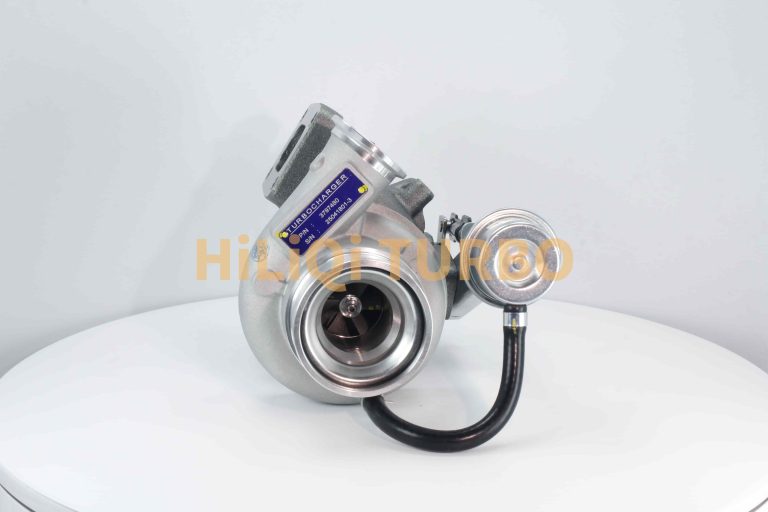
An actuator-side fault can lead to actuator testing without condemning the complete assembly. External lost motion may allow a linkage repair; internal binding may support complete-unit replacement. Verified vane movement with low boost points back to the surrounding system.
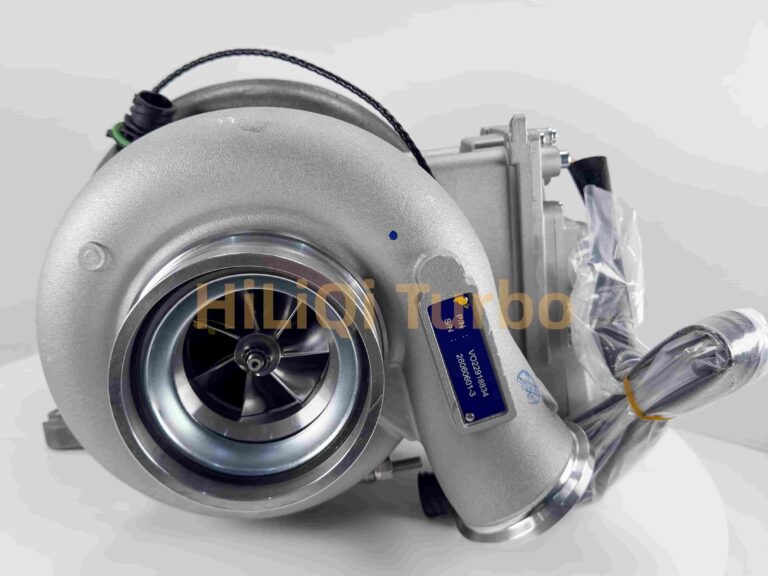
Read the identifiers on the removed unit first, including its supply or OE reference and turbo number. Engine details, actuator arrangement, connector, and installed application then test whether a candidate matches. The category in a listing helps with searching but does not establish fit.

Which HiLiQi Product Data Can Be Used for This Inquiry?
شركة بكين هيليكي لتصنيع الشواحن التوربينية المحدودة provides a relevant reference in its Construction range and the supplied 2026 catalog.
How Do the Website and Catalog Describe BT86544?
The website associates supply number BT86544 with the QSB6.7 engine and HE300VG turbo model. Under that website record are 5327546, 5327551, and 6514791. The catalog uses the spaced engine form QSB 6.7. Its OEM No. entry is 5327551. The Turbo Part No. entry gives 5327546, 5501340, 5640463, and 6514791. The catalog application is Industrial.
These records support an inquiry without extending fitment beyond the stated fields. HiLiQi’s About page mentions coordinate measuring and VSR balancing equipment; that describes inspection capability, not interchangeability. Compare the old tag, connector, actuator, and actual application.
|
Reference field |
Verified information |
|---|---|
|
رقم التوريد |
BT86544 |
|
Engine model |
QSB 6.7 in the catalog; QSB6.7 on the website |
|
Turbo model |
HE300VG |
|
OEM No. |
5327551 |
|
Catalog turbo references |
5327546, 5501340, 5640463, 6514791 |
|
Numbers displayed on website |
5327546, 5327551, 6514791 |
|
Catalog application |
Industrial |
|
Website category |
بناء |
خاتمة
Visible actuator motion answers only whether one part moved. Directional delay, hot behavior, feedback, and boost response show where it stopped being effective. Together they separate actuator trouble, lost linkage travel, internal restriction, and faults elsewhere in the engine system before replacement is chosen.
الأسئلة الشائعة
Can a key-on sweep look normal even when vane travel is incomplete?
Yes. Clearance, slip, incorrect indexing, or resistance under heat and load can remain hidden during a stationary sweep.
Does matching command and feedback confirm final vane position?
Only if the system measures the vanes themselves. Feedback from the actuator does not necessarily show what happened beyond its output.
Should the actuator be replaced if it moves but boost remains low?
Not based on visible movement alone. The actuator may move while the linkage, vane ring, or internal nozzle mechanism fails to complete the required travel. Low boost can also come from charge-air leaks, exhaust-side faults, restricted airflow, or implausible sensor data. Compare command, position feedback, and boost response under load before deciding whether the actuator or the complete turbocharger needs replacement.