Mining equipment gives a turbocharger little room for error. A haul truck or excavator may spend most of a shift under heavy load, then move through sharp changes in engine speed while breathing air loaded with fine dust. When boost drops or oil appears where it should not, replacing the turbo alone may only reset the clock on the same problem. Buyers need to separate engine-side causes from turbo damage, decide whether the rotating assembly and materials suit the duty, and judge whether a validated OE alternative can lower replacement spending without increasing downtime.
What Usually Goes Wrong With Turbochargers in Mining Service?
A mining turbocharger works inside a system where dust, oil condition, exhaust temperature, intake restriction, and machine load all affect the result. The failed unit is therefore evidence, not just a part to remove.
Dust Damage Often Begins Upstream
Fine abrasive dust can reach the compressor wheel through a leaking hose, damaged seal, poorly seated filter, or cracked intake duct. The first visible sign may be erosion along the blade edges. As the wheel profile changes, airflow and boost response can deteriorate.
For severe-duty machines, the construction application range helps frame the operating environment. Before fitting a replacement, the intake path should be checked from filter housing to compressor inlet.
Oil Problems Can Destroy a Good Replacement
Bearing damage may come from restricted oil feed, contaminated lubricant, poor drainage, or delayed oil supply at startup. If the removed turbo shows scoring, discoloration, or heavy oil deposits, the lubrication system needs attention before another unit is installed.
When Should Wheel Material Influence the Replacement Decision?
Wheel material matters only when it is considered with rotor design, airflow demand, speed, temperature, and balancing. Mining buyers need to know which wheel is being discussed and why that material is being specified.
Where a Titanium-Alloy Compressor Wheel Can Make Sense
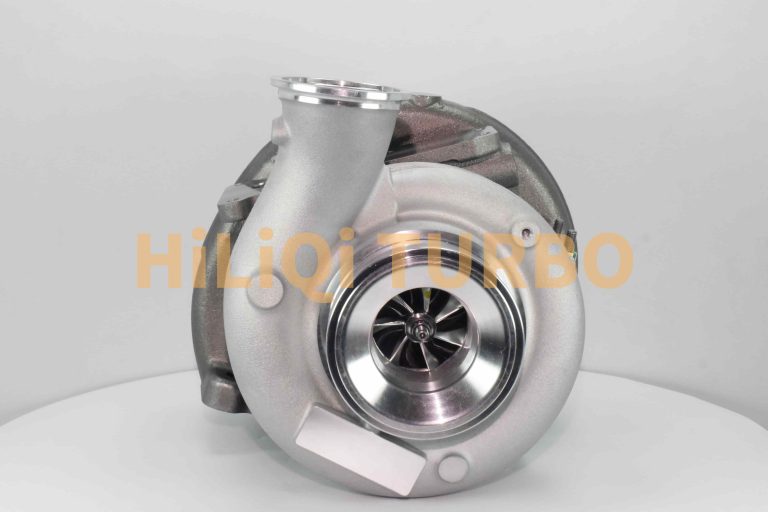
For selected heavy-duty projects, a titanium-alloy compressor wheel may be considered where strength, vibration resistance, corrosion behavior, and rotating-mass requirements justify the choice. The wheel still has to belong to a validated rotating assembly. Changing material without confirming geometry, shaft compatibility, housing clearance, and balance condition can create a new problem.
A purchasing specification should therefore ask for the complete compressor-side configuration, not merely the phrase “titanium wheel.” The turbine wheel works in the exhaust stream and faces a different thermal environment, so its material requirements must be assessed separately.

How Can Buyers Confirm That a Replacement Turbocharger Actually Matches the Machine?
Mining fleets often contain machines that look identical but use different engine ratings, turbo references, actuators, or housing arrangements. A replacement that bolts to the manifold can still be wrong internally, so matching starts with identification rather than appearance.
The buyer should connect the machine record, engine record, and turbo record before releasing the order. Application categories can narrow the equipment context, but final approval should still rely on the exact engine and turbo information.
| Item to Confirm | Why It Matters |
|---|---|
| Engine model and serial information | Separates similar engine variants |
| OE or turbo part number | Establishes the original reference |
| Turbo model | Helps confirm internal configuration |
| Housing and port orientation | Prevents installation rework |
| Actuator or control arrangement | Protects boost-control behavior |
| Failure condition of removed unit | Helps avoid repeating the same damage |
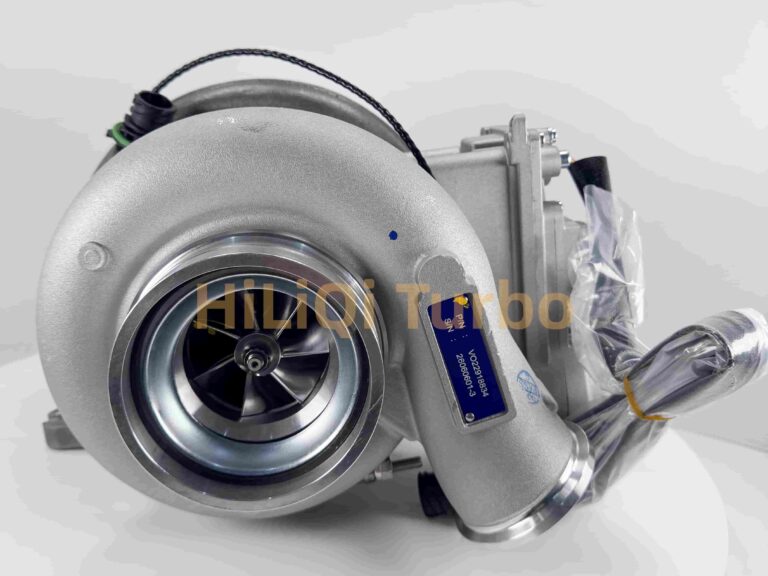
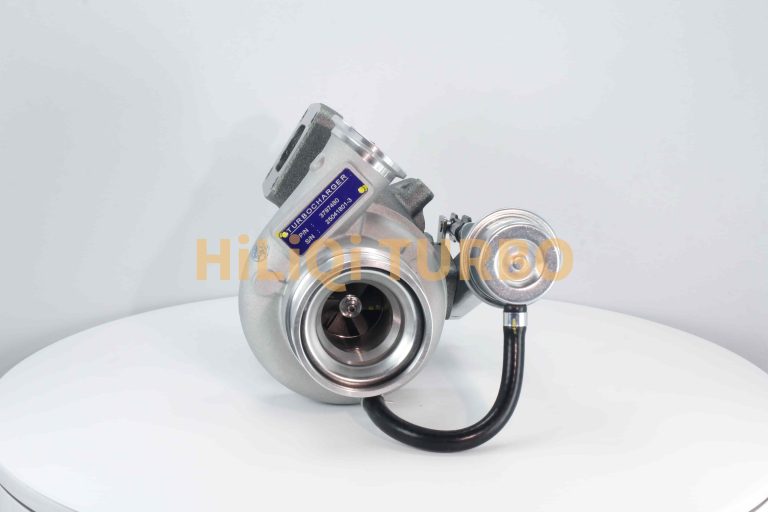
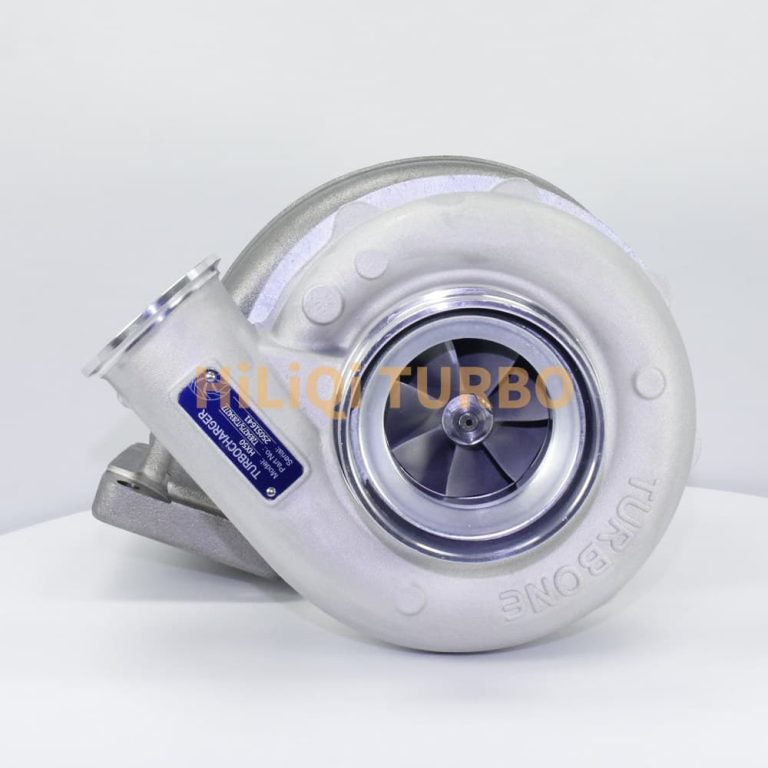
Photographs are useful, but they should support the identification data rather than replace it. For a fleet purchase, one correctly verified sample is more valuable than several units ordered from a visual cross-reference.
When Does an OE-Alternative Turbocharger Produce a Real Cost Advantage?
Mining companies often pay a premium for original-brand parts because downtime is expensive and buying the same brand feels safer. That can become costly across a large fleet when a technically validated alternative is available.
Compare Total Replacement Cost, Not Only Unit Price
The useful comparison includes purchase price, freight, installation labor, machine downtime, replenishment time, and repeat-work risk. An OE alternative with a lower purchase cost can materially reduce replacement expenditure, but only when fitment and operating performance are controlled.
The first alternative unit should be checked against the original reference, engine application, housing interfaces, actuator arrangement, and relevant inspection or test documentation. Once the configuration is proven in the actual machine, purchasing can treat it as an approved replacement instead of reopening the same technical discussion on every order.
The saving comes from a verified substitute, not from accepting an unknown specification because it is cheaper.

What Should Be Checked Before the Machine Goes Back to a Full Shift?
Installation is not the end of the replacement decision. A mining machine may return immediately to high load, so the first operating check is the last chance to catch a system problem before another field failure.
After installation, the technician should confirm oil supply and drainage, inspect intake and charge-air connections, and check exhaust or coolant joints where applicable. The engine should be brought back under load progressively while boost response, smoke, noise, and leakage are observed.
Keep the Failure Record With the Machine
A record of the removed part number, failure symptoms, corrective work, replacement reference, and commissioning result becomes useful when the fleet reaches its next service cycle. It can show whether repeated failures are linked to one engine condition, one application, or one replacement specification.
That record also speeds up purchasing because the next order starts with an approved reference and known service history.
Need Help Reducing Turbocharger Downtime and Replacement Cost in Mining Operations?
Empresa fabricante de turbocompresores Beijing HiLiQi, Ltd. supports heavy-duty replacement projects with application matching, controlled drawings and material requirements, finished-unit inspection, balancing, performance-related testing, and documented product verification. Where a project calls for a titanium-alloy compressor wheel, the wheel can be reviewed as part of the complete rotating assembly rather than as an isolated material upgrade. Mining and heavy-duty buyers can also evaluate OE-alternative references such as the HX40W 6738-81-8090 / 4089711 turbocharger for Komatsu PC200-7 and the HX83 turbocharger for Cummins QSK23 industrial engines when engine and application data are confirmed.
Conclusión
A mining turbocharger should be selected with the failed unit, engine condition, and duty cycle in view. Dust control, oil supply, wheel specification, matching accuracy, and commissioning all influence whether the replacement survives the same environment as the original. Titanium-alloy compressor wheels can be relevant in selected heavy-duty applications, while validated OE alternatives can reduce fleet replacement spending. The next step is to verify the engine and OE reference, correct the original failure cause, and approve one replacement configuration before wider use.
Preguntas frecuentes
1. What are the most common causes of turbocharger problems on mining equipment?
Dust entering the intake, restricted or contaminated oil, poor oil drainage, excessive heat, foreign-object damage, and application mismatch are common causes. The intake and lubrication systems should be checked before the failed turbo is replaced.
2. Does a titanium-alloy compressor wheel automatically last longer in mining service?
Not automatically. Its suitability depends on the wheel design, rotor system, airflow requirement, operating condition, and balancing. Material choice is only one part of the complete turbocharger specification.
3. Can an OE-alternative turbocharger replace an original-brand unit on a mining machine?
Yes, when the engine application, OE reference, housing interfaces, control arrangement, and internal specification are correctly matched. A fleet buyer should validate the first unit before adopting the same alternative more widely.
4. Where does the cost saving from an OE alternative come from?
Savings can come from lower acquisition cost and more flexible sourcing. The real financial benefit should also account for freight, machine downtime, installation labor, replenishment time, and repeat-replacement risk.
5. What information should a mine operator provide when requesting a replacement turbocharger?
Provide the machine and engine models, serial or arrangement information, current turbo model, OE or part number, failure symptoms, operating conditions, required quantity, and clear photographs of the nameplate and installation.