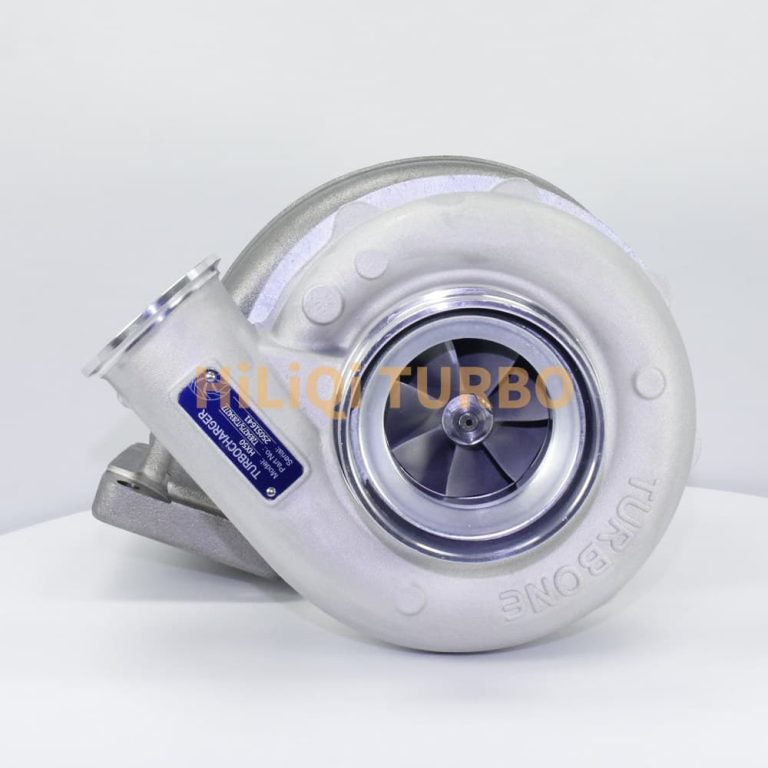
This information is not simply a website policy for the importers, distributors, repair shops, fleet services and private label buyers of Turbocharger. Price lists, customer lists, engine matching data, warranty information, negotiating with suppliers and the long-term market position are all affected by privacy. Information that a trusted manufacturer will want to keep confidential from a buyer are the OE numbers of the buyer’s turbochargers, the vehicle applications to which they have been fitted, failure information in the form of photographs, sample requirements, and the price at which the manufacturer’s dealers sell Turbocharger products. The manufacturer must protect the privacy of his customers whilst at the same time providing them with the technical information required for them to select a suitable Turbocharger, test it, purchase it and support it in service.
Why does privacy matter in Turbocharger sourcing?
Turbocharger sourcing often involves more than a simple product inquiry. Buyers may need to disclose engine models, part numbers, vehicle platforms, annual demand, current supplier problems, and target markets before a supplier can recommend a suitable replacement.
What business information is usually sensitive?
Experienced buyers usually protect customer names, distribution channels, price, warranty, and future products. A supplier might want to tell a distributor which of the models of turbochargers he is selling are doing well in his area. A repair chain does not want to have failure data or customer complaints distributed outside of the technical support process in question.
Privacy is also important when we work on private-label projects. Items like packaging artwork, brand positioning, MOQs and even launch timing in different regions should remain under control in order to safeguard the competitive edge.
What technical information should also be protected?
When selecting a turbocharger, information such as the OE cross-reference number, CHRA requirements, turbine housing details, actuator type, oil leakage symptoms, boost pressure problems and installation conditions can be critical for the manufacturer to check for compatibility.
A practical privacy process limits access to individuals required to use the information to quote, to engineer, to prepare samples, to produce, to inspect, to ship and to support after sales service.
How do manufacturers protect customer privacy during Turbocharger cooperation?
There are many ways that a manufacturer protects privacy on a daily basis, well beyond the language of any law or agreement. A buyer has to look at a manufacturer’s working habits on a daily basis. So for example, a buyer has to look at how a manufacturer controls the communication with a buyer, how a manufacturer handles documents with a buyer, and how a manufacturer uses the data that’s been collected from the buyer’s inquiries.
How should inquiry and quotation data be handled?
For a supplier to be considered privacy-conscious they should use inquiry data only for business communication, product matching, quotations, order processing and for support requested by the customer. HiLiQi’s privacy policy states that business contact data which is submitted by means of e-mails or contact forms is used for the company’s internal purposes. Such personally identifiable information may be used to complete any orders, to provide any services requested by the customer and to answer any questions.
For buyers, this data should only be transmitted in a structured and controlled manner and therefore not the complete customer database for example. Instead a list with OE numbers, required quantities and technical characteristics for the respective project is sufficient and can be easily transmitted by the procurement team.
What controls help reduce leakage risk?
Control the use of quotations, separate private-label artwork from other files, limit disclosure of customer names, and designate who is responsible for all technical drawings and product photos. Email attachments should be clearly named and stored in the correct place. Such attachments should not be reused in public marketing communications without permission from the sender.
Written non-disclosure agreements can be requested for large projects, custom development of Turbochargers, or regional distribution discussions.
| Sensitive item | Why it matters | Practical protection method |
|---|---|---|
| Customer list | Reveals sales network | Share only when required |
| OE cross-reference data | Shows product strategy | Limit to technical team |
| Private-label packaging | Affects brand launch | Use NDA and version control |
| Warranty photos | Shows field problems | Remove customer identifiers |
| Price targets | Affects negotiation power | Keep within sales and management |
What privacy questions should buyers ask before choosing a supplier?

A buyer need not go through a legal audit with every inquiry but it is perfectly reasonable for a buyer to ask questions that expose how a supplier treats information that is shared with partners.
What should be asked during early supplier evaluation?
Before sharing sensitive files, it is good to ask who will be able to view your inquiry, will the information provided be used solely for producing the requested quote, will customer’s name and project details be used for marketing purposes. In addition, will private-label samples, packaging designs and marketing plans for customer’s projects be kept separate from the company’s public product promotion.
This is particularly important when the buyer is creating a regional turbocharger catalogue or designing a new product to be sold in the aftermarket.
What should be checked before a larger order?
Before entering into full production, it is wise to check on a few important details of a supplier’s documentation and approval processes. This would include: – document control – sample approval records – packaging artwork approval – warranty communication – after-sales confidentiality If a failure analysis is carried out by a distributor, the resulting photos should be used for technical review, not public display.
A simple buyer checklist may include:
- Confirm the supplier’s privacy policy or confidentiality terms
- Use the NDA documents for the private label projects, and use the NDA documents for the custom projects.
- Share only the technical data required for the current stage.
- Mark confidential files clearly
- Control who receives pricing, drawings, and customer information
- Ask whether project photos may be used publicly
- Record sample approvals and all artwork versions.
Which laws and standards are relevant to customer privacy?
When dealing with privacy, the rules depend on the location of the buyer, supplier, website visitor or end customer. For a manufacturer of Turbochargers, it is not sufficient to set out a general Privacy Policy statement for all markets and then rely on that for compliance with local privacy laws.
How does GDPR affect international B2B communication?
For EU-related personal data, the European Commission identifies the General Data Protection Regulation as the main EU data protection framework, covering rules for personal data inside and outside the EU. The Commission also notes that only the GDPR legal text creates enforceable rights and obligations.
For a Turbocharger supplier, this may matter when processing names, emails, phone numbers, company contacts, and inquiry records from EU customers. It does not mean every technical file is personal data, but contact details and identifiable communication records should be handled carefully.
Is ISO/IEC 27001 mandatory for manufacturers?
ISO/IEC 27001:2022 is a voluntary international standard for information security management systems. ISO states that it defines requirements for an ISMS and helps organizations manage risks related to the security of data they own or handle.
Unless a supplier has a valid certificate of certification from an accredited body, they should not claim certification. It is also important for buyers to note that a supplier’s privacy policy, their internal management procedures, their certification of a particular product, and their formal ISO/IEC 27001 certificate are all different things.
How does privacy protection build long-term supplier trust?

Building trust in high performance Turbocharger manufacturing requires the manufacturer to supply stable product matching, communication, warranty handling and business respect for the buyer’s position in life. Privacy protection helps supporting these aspects.
Why does confidentiality improve technical cooperation?
Customers trust to share with supplier details of failure, such as symptoms, photos during installation, oil leakage, problems with actuators or complaints about boost. Supplier uses this information to check whether reason of problem is a product mismatch or engine condition that was not known at time of sale, or perhaps a wrong installation, lubrication failure etc.
By not making information about a buyer’s purchasing decision confidential, there is a risk that they will withhold key information. This can lead to the wrong solution being recommended, delays in fixing problems with products, and repeated warranty claims.
How does privacy affect after-sales service?
After-sales support often is linked with claims of a very sensitive nature. The buyer can submit vehicle data, workshop reports, videos, photos etc. The responsible supplier will then use this information to check and evaluate the case in question. In doing so he should not misuse the information to blame the buyer or to expose the end customer.
Record after-sales privacy helps maintain for both parties a clear record of installation, failure analysis, replacement, and warranty terms.
How can Beijing HiLiQi Turbocharger Manufacturing Co., Ltd. support privacy-focused buyers?
After a buyer has outlined his or her expectations for technical requirements and confidentiality issues, he or she wants to have a discussion with a potential manufacturer to get into the details of how a particular product might match up his or her needs as well as how the manufacturer will handle provided information.
What does the company publicly state?
Beijing HiLiQi Turbocharger Manufacturing Co., Ltd. states on its website that it was founded in 2005 and specialises in the highest quality precision-engineered turbochargers. Details of the closely traced assembly lines of HiLiQi and its wide range of quality aftermarket turbocharger products are ideal for buyers looking for Turbocharger replacement parts, comparing suppliers to find the best quality at competitive prices.
Our Company’s privacy policy for partner privacy states business contact information will be mostly used for the Company’s internal purposes. It states personal information and other information available to the Company will be used to complete any orders placed by partners for services and also to respond to any questions or request for information made by the partner to the Company.
Conclusion
Privacy protection is part of responsible Turbocharger sourcing because technical files, pricing, customer data, and warranty records can all affect a buyer’s market position. Manufacturers can build trust by limiting information use, controlling internal access, respecting private-label details, and handling after-sales data carefully. Buyers should share enough information for accurate product matching, but not more than the supplier needs at each stage. GDPR is a mandatory legal framework for relevant EU personal data, while ISO/IEC 27001 is a voluntary information security management standard unless certification is specifically required. Long-term trust depends on both product reliability and disciplined information handling.
FAQs
1. Why is customer privacy important when sourcing Turbochargers?
Customer privacy is important when buying Turbochargers because customers tend to provide a lot of information such as OE numbers, pricing targets, customer applications, warranty photos, and regional sales plans.
2. How do manufacturers protect customer privacy in normal cooperation?
To protect privacy information as a manufacturer, you would limit access to data, use information collected only for the purposes for which the customer requested that information to be collected to begin with, secure all files that contain information that could potentially be used to identify a customer, not make public any information regarding your customers, and require other companies and/or individuals to sign a Non-Disclosure Agreement when it is necessary for them to have access to any such information.
3. Should buyers send full customer lists to a Turbocharger supplier?
As a general rule, no. The Buyer should only provide information to the Seller that is required to quote, match products, produce the goods, or provide after sales service.
4. Is ISO/IEC 27001 the same as a privacy law?
No. ISO/IEC 27001:2022 is a voluntary information security management standard. Privacy laws, such as GDPR for relevant EU personal data, create legal obligations.
5. What makes a supplier a trusted manufacturer for privacy-sensitive projects?
Manufacturer is transparent about confidentiality, handles documents with care, protects private-label information, supports technical review and does not use information of partners without their consent.