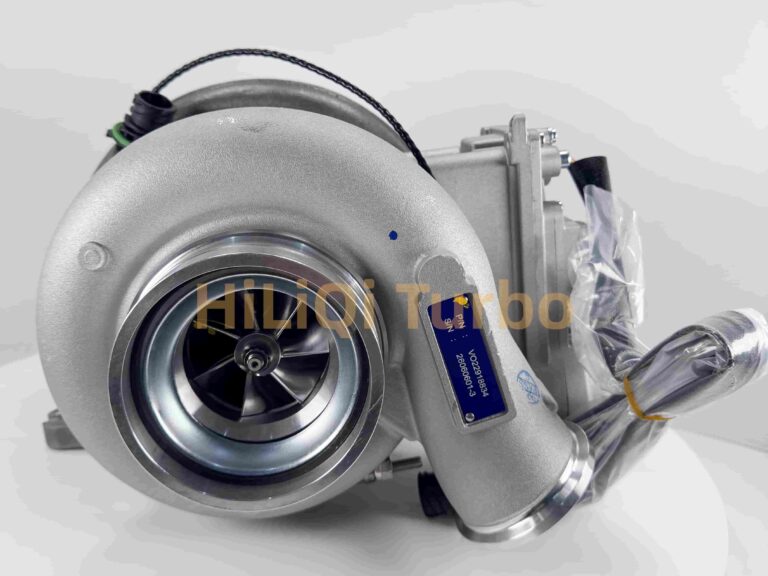
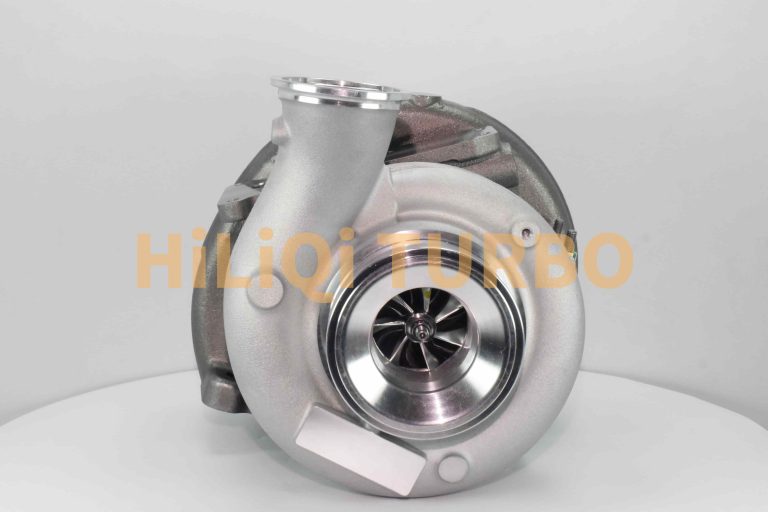
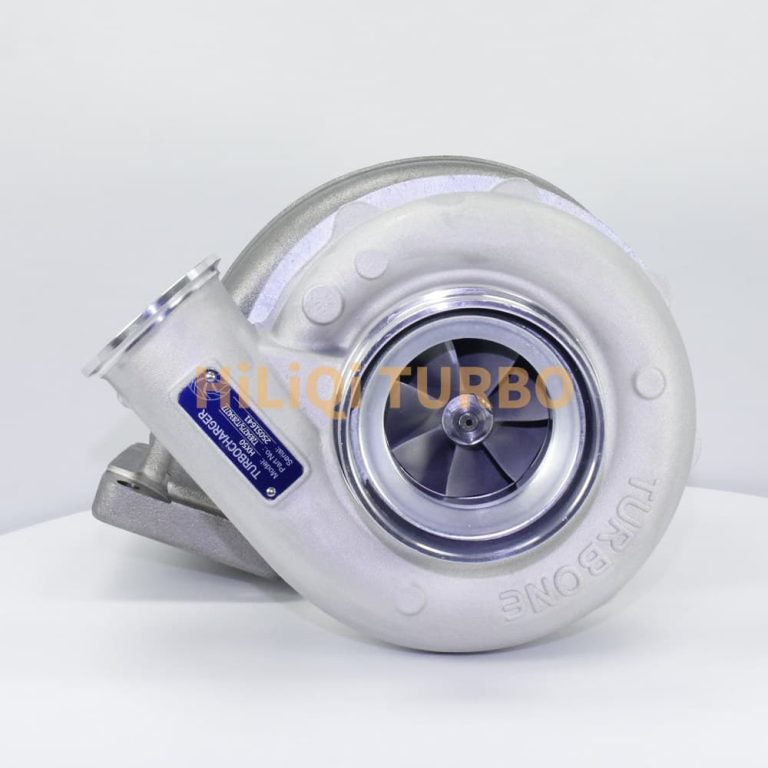
A turbocharger compressor map can tell an engine buyer whether a proposed compressor operates within the airflow and pressure range required by an engine. The difficulty begins when two suppliers offer different turbocharger references, both claiming that their products meet the same engine requirements. A similar housing or higher maximum efficiency does not establish equivalent performance. Buyers need to look at the compressor’s operating range, the conditions under which its data was measured, and the relationship between that data and the engine’s actual duty cycle. Understanding those details helps prevent an apparently suitable replacement from becoming an expensive application problem.
What Does a Turbocharger Compressor Map Actually Tell Buyers?
A compressor map describes the behavior of a particular compressor configuration across a range of operating conditions. Its usefulness depends on understanding the measurements, including how the test conditions were established.
Airflow and Pressure Ratio Are the Starting Points
Most compressor maps place corrected air mass flow on the horizontal axis and pressure ratio on the vertical axis. Corrected flow accounts for inlet temperature and pressure, allowing performance measurements to be compared using defined reference conditions.
Pressure ratio describes the relationship between absolute compressor outlet pressure and absolute inlet pressure. It is different from the boost pressure displayed by a vehicle’s dashboard or measured at the intake manifold.
That distinction matters when a buyer receives engine specifications containing only a target boost figure. Intake restrictions and pressure losses between the compressor and manifold can affect the pressure ratio required from the compressor.
A useful technical comparison therefore starts by confirming the measurement locations, units, and correction convention used in the supplied map.
Efficiency Islands Do Not Tell the Whole Story
The curved contours across a compressor map indicate efficiency at different combinations of pressure ratio and airflow. Other lines represent compressor rotational speed.
A compressor may achieve a high efficiency value at one operating point but perform less favorably when engine demand changes. Buyers should examine the region the engine actually uses instead of selecting a product based on its maximum published efficiency.
The map also describes compressor-stage performance, not the complete turbocharger. Turbine matching, engine calibration, and installation requirements must still be considered separately.
Which Engine Operating Conditions Should Be Compared With the Map?
Before asking suppliers for compressor data, buyers need to establish what the engine requires in service. Rated power provides a useful reference, but it does not describe how the engine behaves at every operating point.
A truck climbing a long gradient places different demands on its turbocharger from the same vehicle accelerating away from a stop. Industrial generators introduce another operating pattern, particularly when they spend long periods near a defined operating speed.
Identify the Operating Points That Matter
Technical teams should establish the required airflow and compressor pressure ratio at the engine’s relevant loads and speeds. Where operating conditions vary significantly, inlet temperature and pressure must also be considered.
For distributors reviewing truck and bus applications , engine ratings and operating duty should be recorded separately. Two vehicles using related engine families may still require different turbocharger configurations.
A purchasing team can organize the information before requesting a technical comparison:
| Required Information | Purchasing Purpose |
| Engine model and rated output | Identifies the intended engine configuration |
| Airflow at relevant operating points | Establishes compressor flow requirements |
| Compressor inlet conditions | Supports corrected-flow calculations |
| Required pressure ratio | Defines the pressure increase |
| Original turbocharger reference | Establishes the approved replacement baseline |
Without reliable engine airflow information, a compressor map cannot establish compatibility by itself. For an unchanged engine, retaining the original approved turbocharger specification may be more practical than attempting to select another compressor from incomplete data.

How Should Buyers Interpret Surge, Choke, and Compressor Efficiency?
The compressor’s permitted operating range matters because an engine rarely remains at one operating point throughout its service life. Buyers need to understand how the required airflow and pressure ratio compare with the map’s operating boundaries.
Why Does Surge Margin Matter at Lower Airflow?
The surge boundary lies toward the low-flow side of the compressor map. Operating beyond that boundary can produce unstable airflow and pressure fluctuations.
An engine operating point close to surge deserves attention even if the compressor achieves good efficiency elsewhere on the map.
This is particularly relevant when comparing compressors for engines that experience substantial changes in load. The required surge margin should be established through appropriate engineering data rather than estimated from the visual distance between an operating point and the boundary.
What Happens When the Compressor Approaches Choke?
At the high-flow boundary, commonly described as choke, the compressor becomes increasingly restricted in its ability to deliver additional airflow efficiently.
A compressor that reaches its high-flow limit near the engine’s required operating point may be unsuitable for that application, even when its maximum pressure ratio appears sufficient.
The compressor’s speed limit must also be respected. An operating point should not be accepted simply because it lies inside the visible map boundaries if reaching it would require an impermissible rotational speed.
For buyers comparing two candidate compressors, the useful question is whether each covers the engine’s required operating range with appropriate margins. A larger flow capacity or higher peak efficiency does not automatically establish a better application match.
What Can Turbocharger Performance Test Records Confirm?
A supplier may provide a compressor map, a performance test report, or individual measurements recorded during turbocharger testing. These documents are not interchangeable, and purchasing teams should understand what each establishes before using it as qualification evidence.
A Single Test Result Is Not a Complete Compressor Map
A maximum compressor efficiency figure or pressure-ratio result describes performance under the stated test conditions. It does not show how the compressor behaves across its entire operating range.
A complete compressor map requires measurements at multiple airflow and pressure-ratio conditions. Without that information, a buyer cannot determine the full efficiency distribution or surge margin from an isolated result.
The tested configuration matters just as much as the measured value. Changing the compressor wheel or housing may alter performance even when the complete turbocharger belongs to a familiar model family.
When evaluating replacement units for construction equipment applications , buyers should confirm that available performance records correspond to the exact compressor and assembly configuration being quoted.
A record from a related model should not be treated as evidence for another configuration without an appropriate technical basis.
Where the supplier cannot provide a complete compressor map, the buyer should establish whether the original approved application reference and other available technical documentation provide sufficient evidence for the intended replacement.

When Should a Compressor Map Influence the Final Purchasing Decision?
The level of technical review depends on whether the buyer is replacing an existing approved turbocharger or considering a different configuration.
An unchanged engine using a correctly matched replacement may not require a new compressor selection exercise. Engine identification, original turbocharger references, and confirmed assembly specifications can provide a more direct purchasing basis.
The situation changes when a proposed replacement uses a different compressor wheel, housing, or performance-related configuration.
Separate Compressor Matching From Complete Turbocharger Approval
A compressor map cannot confirm whether the turbine housing, actuator, mounting interfaces, or lubrication connections match the engine.
Buyers should therefore retain the original turbocharger number, proposed replacement reference, engine identification, and any documented configuration differences.
The quotation should identify whether the supplied product is a complete turbocharger, CHRA, or another assembly configuration. Where a technical change is proposed, the buyer should request appropriate engineering evidence before approving the replacement.
A purchasing decision based on compressor data becomes meaningful only when the rest of the turbocharger configuration and engine application have also been confirmed.
Need Technical Support for Turbocharger Application and Performance Evaluation?
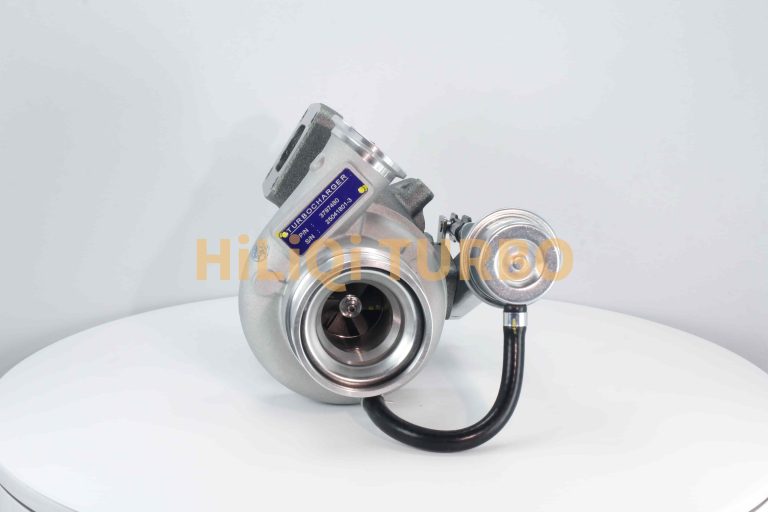
Пекинская компания по производству турбокомпрессоров HiLiQi. supplies replacement turbochargers for commercial vehicles and industrial engine applications. Its documented processes include drawing and material requirements, dimensional inspection, balancing, and performance-related testing for applicable models. Buyers can review the company’s manufacturing and testing capabilities when determining what technical documentation is available for a purchasing project. One application reference is the HE200WG BT86527 turbocharger for the Cummins QSF engine, part numbers 3797480 and 3797481 . The product listing provides identification information, while complete compressor-map availability and application-specific performance requirements should be confirmed separately before an engineering change or replacement order is approved.
Заключение
A compressor map is useful when the engine’s operating requirements can be compared with verified compressor performance data. Airflow, pressure ratio, efficiency, surge margin, choke boundary, and compressor speed all influence the technical decision, but none independently establishes complete turbocharger compatibility. For routine replacements, buyers should begin with the original approved reference. Modified applications may require additional engineering validation. Before approving an order, confirm the engine specification, proposed turbocharger configuration, available test evidence, and required assembly scope so the purchasing decision reflects the actual application rather than isolated performance figures.
Часто задаваемые вопросы
1. Can a compressor map confirm whether a replacement turbocharger fits an engine?
No. A compressor map describes compressor performance rather than mounting geometry, turbine matching, or actuator configuration. Buyers should combine the available performance information with original part references, engine application data, and confirmation of the complete replacement assembly.
2. Is compressor pressure ratio the same as boost pressure?
No. Compressor pressure ratio compares absolute outlet and inlet pressures, while gauge boost measures pressure relative to atmospheric pressure. Intake restriction and downstream pressure losses can also affect the relationship between compressor pressure ratio and manifold boost.
3. Does the compressor with the highest efficiency always provide better engine performance?
Not necessarily. Peak efficiency represents one region of the compressor map. Buyers must also consider the engine’s required airflow, pressure ratio, surge margin, compressor speed limits, and operating conditions when comparing different compressor configurations.
4. Can a maximum pressure-ratio test result replace a complete compressor map?
No. A single pressure-ratio measurement does not describe how airflow, efficiency, and rotational speed vary across the operating range. Additional performance data may be necessary when the purchasing decision depends on those characteristics.
5. Should buyers request a compressor map for every routine turbocharger replacement?
Not necessarily. An unchanged engine using an accurately matched replacement may be qualified through its original application and part references. Compressor-map data becomes more relevant when the proposed configuration differs or a new engine application is being evaluated.