A turbocharger end-of-line test report should help buyers establish whether the purchased product meets the inspection requirements agreed upon before shipment. A report marked “Passed” is not sufficient when it lacks product identification, measurement results, or applicable acceptance limits. Purchasing managers and quality engineers also need to distinguish between tests performed on individual components, complete assemblies, and selected qualification samples. Dynamic balancing, rotor inspection, actuator calibration, and performance testing provide different evidence, and not every turbocharger requires all these procedures. The following guide explains how to review the relevant records, verify product traceability, and resolve documentation issues before approving a shipment.
Which End-of-Line Test Records Should Buyers Request for Different Turbocharger Models?
The inspection requirements should follow the purchased product configuration rather than a universal checklist. A fixed-geometry turbocharger, a variable-geometry assembly, and a separately supplied CHRA may involve different components and verification procedures.
Match the Inspection Plan to the Product Configuration
Before production, buyers should establish which inspection records are required under the approved technical specification. The agreement should identify the inspected assembly, applicable test procedures, acceptance criteria, and documentation required before shipment.
| Product configuration | Applicable inspection records to consider |
| Fixed-geometry turbocharger | Rotor balancing and relevant assembly inspection |
| Wastegated turbocharger | Applicable assembly checks and wastegate operation |
| Variable-geometry turbocharger | Nozzle mechanism and actuator calibration, where required |
| CHRA | Rotor balancing, clearances, and assembly inspection |
| Complete turbocharger | Model-specific final inspection and agreed performance testing |
These are possible inspection requirements, not a mandatory sequence for every model. A complete turbocharger may contain components tested earlier in production, while certain performance tests may be conducted on selected samples rather than every finished unit.
The buyer should confirm the actual inspection scope before requesting documents.
How Should Buyers Review Dynamic Balancing and Rotor Inspection Records?
Balancing records help establish whether the tested rotating assembly meets its specified balance requirements. They do not, however, provide complete evidence of turbocharger performance or confirm every mechanical characteristic of the rotor.
Identify the Tested Assembly and Acceptance Limit
A balancing record may correspond to an individual rotating component, an assembled rotor, or a completed CHRA. The buyer should establish which configuration was tested and whether it matches the purchased product.
Relevant information may include the assembly identification, test conditions, measured imbalance or vibration, applicable acceptance limit, and final inspection result.
The numerical limits must follow the approved specification for that configuration. A balancing limit used for one rotor design should not automatically be applied to another model.
Check Whether Additional Rotor Inspection Is Required
Depending on the assembly, separate inspection may cover axial clearance, radial clearance, shaft movement, or wheel-to-housing contact.
These measurements help establish whether the assembled components meet the defined mechanical requirements. A satisfactory balancing result cannot replace them.
Where corrective work was necessary, buyers should confirm that the applicable follow-up inspection was completed and that the final record reflects the accepted assembly.

When Are Actuator Calibration and Performance Test Records Necessary?
Actuator calibration and performance testing serve different purposes. Buyers should request them according to the product’s control configuration and the inspection requirements agreed upon for the order.
Check Actuator Calibration Where Applicable
A turbocharger equipped with an applicable wastegate or variable-geometry control system may require verification of its actuator setting and operation.
Depending on the configuration, the record may include actuator identification, specified position or setting, measured response, and the applicable acceptance range.
Electronically controlled assemblies may require additional checks of position feedback or electrical functions where specified.
A fixed-geometry turbocharger without an actuator does not require the same calibration procedure. Buyers should also confirm whether the actuator is included in the purchased assembly.
Understand What Performance Results Demonstrate
Performance records may contain compressor pressure ratio, airflow, efficiency, rotational speed, or other measurements specified by the test procedure.
Buyers should establish whether the report concerns a production unit, a qualification sample, or a separate engineering evaluation.
A result measured on one configuration cannot automatically establish the performance of another model. Likewise, a qualification or durability report does not prove that every subsequent production unit underwent the same testing procedure.

How Can Buyers Verify Traceability, Test Conditions, and Acceptance Limits?
A technically detailed report becomes difficult to use when it cannot be connected to the purchased product. Identification and test conditions should therefore be reviewed alongside the measurement results.
Connect Test Records to the Correct Product
Depending on the manufacturer’s system, records may be linked through a product serial number, assembly identifier, production batch, or test reference.
The identification method must provide the traceability required by the purchasing agreement. If individual-unit records are required, a general batch inspection statement may be insufficient.
Buyers should also check that the engine application and product reference correspond to the approved order. Relevant turbocharger application categories can support product identification, but they do not replace model-specific confirmation.
Confirm the Conditions Behind Each Result
Different tests require different supporting information. A performance test may specify rotational speed, oil conditions, airflow, or pressure ratio, while dimensional inspection requires the relevant measurement locations and tolerances.
Recorded values should be compared with the acceptance limits established for the tested configuration.
When a report contains measurements without defined limits, buyers should request the applicable specification before determining whether the product meets the agreed requirements.
What Should Buyers Do When Test Records Are Missing or Results Fail Acceptance?
A shipment should not be approved solely because the supplier has provided a collection of inspection documents. Buyers need to establish whether all agreed requirements have been addressed and whether any unresolved discrepancies affect the purchased products.
Resolve Documentation and Inspection Issues Before Shipment
If a required record is missing, ask whether the test was performed, the document has not yet been issued, or the procedure was excluded from the approved inspection plan.
An out-of-limit result requires a different response. The supplier should identify the affected product, explain the corrective action, and provide applicable follow-up evidence before shipment release.
For orders containing several turbocharger configurations, each product should be reviewed against its own approved inspection requirements.
The final decision should be based on the agreed specification, applicable test evidence, traceability information, and documented resolution of any nonconforming results.
Need Help Reviewing Turbocharger Test Records Before Shipment?
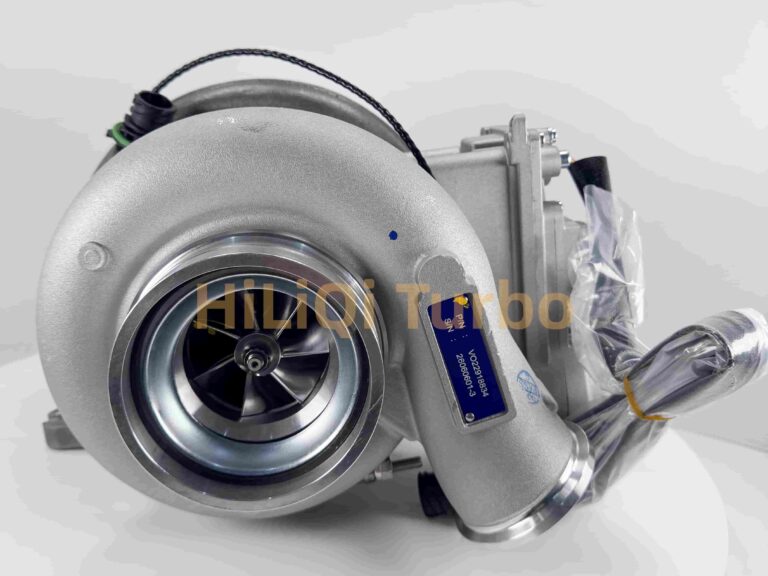
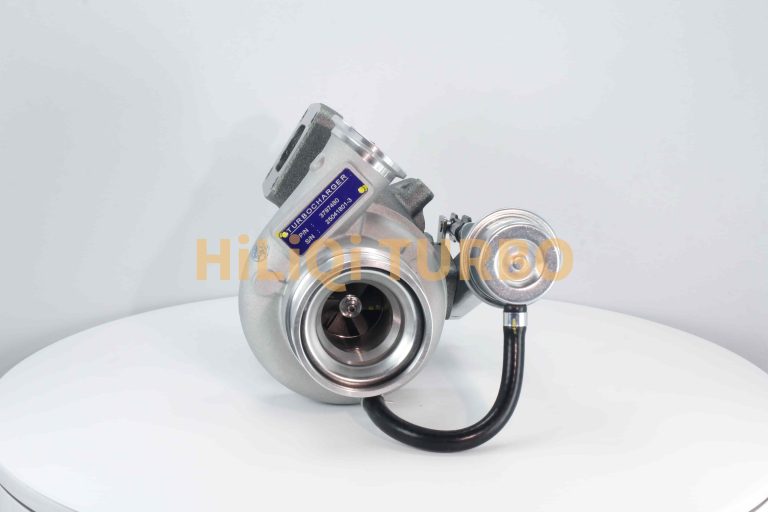
Пекинская компания по производству турбокомпрессоров HiLiQi. supports B2B buyers that need to review turbocharger inspection and pre-shipment records against the purchased configuration. Its documented manufacturing and testing capabilities include dynamic balancing, dimensional inspection, clearance checks, sealability verification, and performance-related testing where applicable. One relevant product reference is the HE400VG turbocharger for Volvo MD11 construction equipment: Supply No. BT81691, OEM No. 22918834 / VOE22918834, and Turbo Part No. 5355479, 6454582, 5355489. Because this configuration includes control components, buyers should confirm which actuator calibration, balancing, and final-inspection records apply to the exact ordered configuration before shipment.
Заключение
Reviewing turbocharger end-of-line test reports requires more than checking whether individual results are marked as acceptable. Buyers should establish which tests apply to the purchased configuration, confirm the identity of the tested product, and compare recorded measurements with the agreed acceptance limits. Balancing, rotor inspection, actuator calibration, and performance testing provide different evidence and should not be treated as interchangeable procedures. Before shipment, purchasing and quality teams should resolve missing documentation, clarify test conditions, and obtain appropriate follow-up records for any nonconforming results.
Часто задаваемые вопросы
1. Does every turbocharger require an actuator calibration report?
No. Actuator calibration applies to configurations with relevant control components, such as certain wastegated or variable-geometry turbochargers. Buyers should confirm the supplied assembly and its approved inspection requirements rather than requesting the same calibration record for every model.
2. Can dynamic balancing results confirm complete turbocharger performance?
No. Dynamic balancing evaluates the balance condition of the tested component or rotating assembly. It does not independently establish compressor efficiency, pressure ratio, actuator function, or engine compatibility. Additional inspection or performance evidence may be required.
3. Must every turbocharger have an individual serial number linked to its test report?
The required traceability level depends on the purchasing agreement and the manufacturer’s identification system. Records may use individual serial numbers or other approved identifiers. Buyers requiring individual-unit traceability should establish that requirement before production.
4. What should buyers do when a test report has no acceptance limits?
Request the applicable specification and acceptance criteria for the recorded measurements. Without defined limits, the buyer cannot independently establish conformity. The supplier should clarify the test procedure and provide the information needed to evaluate the result.
5. Can a third-party durability report replace an end-of-line test report?
No. A third-party durability report documents the tested sample under stated conditions. It does not automatically establish the acceptance status of subsequent production units. Buyers should distinguish qualification evidence from the inspection documentation agreed upon for their shipment.