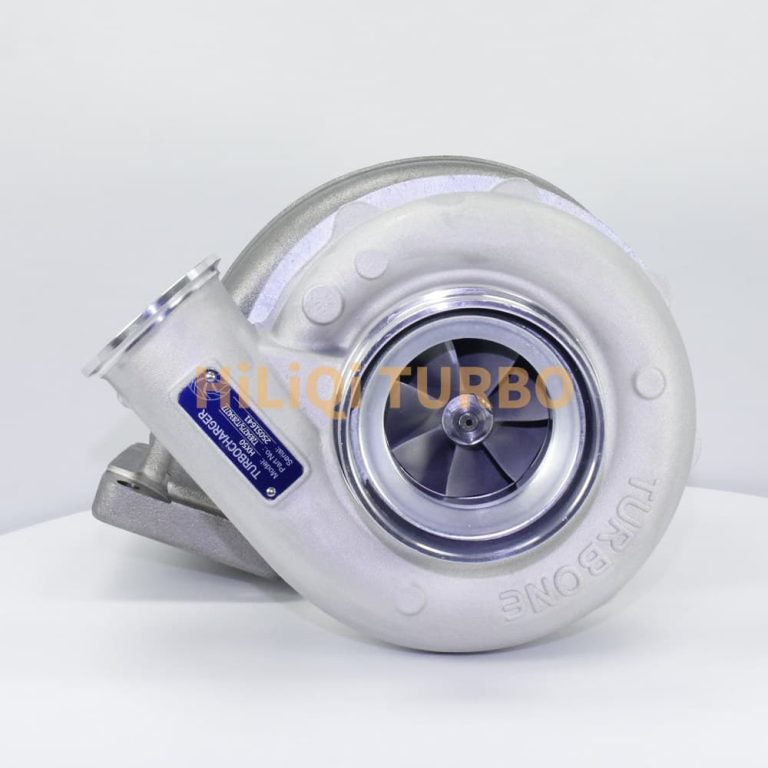
The global aftermarket turbocharger industry has entered into a new era of competition and innovation. By increasingly demanding forced-induction systems that are not only efficient and durable but also flexible, vehicle manufacturers as well as performance enthusiasts are driving the global aftermarket turbo market to exceed $25 billion by 2026. The vehicle component forecasts are based on new technologies, environmental issues and the ever-increasing power density of both passenger cars and trucks.
Market Dynamics and Growth Drivers
The demand for increased performance on late model commercial fleets and passenger vehicles has led to rapid growth in the market for aftermarket turbochargers. The operator of a fleet of trucks for business wants better fuel economy with more torque, while the enthusiast of cars and trucks wants better 0-60 mph times by increased boost pressure using a performance turbocharger. In addition, the increasingly strict worldwide emission regulations, such as Euro 7 in Europe and Tier 4 in North America, force the design of new turbocharger configurations using advanced materials with higher thermal resistance and lower friction loss.
And within hybridization trends too there are changes underway. Instead of immediately opting for fully electric powerplants, most hybrids in the future will be electric-assisted turbos (e-turbos) for interim period bridging the internal combustion engine (ICE) and fully electric set-up. These have the advantage that in addition to recovering energy during braking they are able to eliminate turbo lag, with instant response to pressing the accelerator as if by magic delivering a boost of power. An application that is currently under test in the Formula 1 World Championship and it is only a matter of time before it reaches the roads too.
Technological Advancements Shaping the Industry
Innovation within the aftermarket turbocharger market is rising at great pace as improvements in aerodynamics, in the use of new materials and in the use of better bearings are reported. The latest designs of compressor wheel for example have been developed using computational fluid dynamics (CFD) to increase efficiency of airflow by up to 8% and to reduce energy losses at high RPM. New ceramic ball bearing designs are also replacing the traditional journal bearing, which offer reduced friction, improved spool characteristics during transient loading.
The integration of electronic control systems for variable geometry turbos (VGTs) supports efficient boost pressure across all engine operating ranges. In addition, the possibilities of design for additive manufacturing (3D printing) have been successfully used for the faster testing of new turbine designs and for production without waste.
Key Considerations in Selecting Aftermarket Turbo Solutions
When selecting an aftermarket turbocharger, one has to go beyond the horsepower that this component is able to produce. The chosen part has to be compatible with the respective application, and also adequate in terms of performance as well as durability.
Compatibility Across Engine Brands and Models
Compatibility is the key for aftermarket turbo’s on multi-brand engine platforms. To avoid surge or choking, the compressor map has to be matched exactly to the displacement of the engine and the corresponding air flow. A high-pressure compressor for example is not suitable for small displacement engines and will rather cause lag than increased performance.
Mounting configurations—including exhaust flange patterns, oil feed routing, and intercooler connections—must also be carefully reviewed during selection. Builders working across brands such as Cummins, Caterpillar, or Toyota often prioritize turbos with modular housings or adjustable wastegate positions for cross-platform adaptability.
Performance Metrics for Evaluation
Testing for performance is done by testing the boost response time, peak power and efficiency at constant load. For heavy duty diesel engines running long periods of time a durability test under high load is necessary, especially at high exhaust gas temperatures. As stated before the trade off between spool time and top end power is determined by the intended use for the vehicle. A street vehicle will benefit from a turbo with fast spool time at mid RPM, whereas a track vehicle will require a turbo with high top end power capability.
Material and Design Innovations in Modern Turbos

Advances in materials science have revolutionized how modern turbos are able to function under the extreme conditions to which they are subjected.
Advanced Materials for Enhanced Reliability
Titanium aluminide turbine wheels have become the standard material for turbine wheels in high performance gas turbines due to their low inertia and their non-deforming capability up to temperatures of around 950 °C. In addition to that ceramic ball bearings are widely used. Their low friction and quiet running capability prevent heat generation during acceleration. Even more critical for high performance engines is the compression side. Here the use of composite materials for the housing has become very popular in lightweight racing applications. Even with a highly reduced mass the material still has a high tensile and impact strength.
Aerodynamic Optimization Techniques
The use of CFD modeling, or computational fluid dynamics, enables the engineer to optimize the shape of the blades to achieve maximum efficiency whilst minimizing backpressure losses. It is also common to find low-friction coatings on rotating parts in high speed applications, in order to extend the life of said parts, due to the reduced wear and tear that the coating provides in contact areas. The Variable Geometry Turbine (VGT) has also seen much evolution in recent years and are designed to be able to optimize performance over a wide range of rpm, by using vanes which are controlled electronically and which can be adjusted to optimize exhaust flow. This is typically done via a potentiometer or similar, and allows for very fine control of the turbines operation.
Evaluating Aftermarket Turbo Manufacturers in 2026
As the market keeps expanding globally, it gets harder and harder to choose the suppliers that are right for you. Choosing the suppliers that are going to deliver right for you is critical.
Criteria for Supplier Selection
Other factors that most people use to evaluate manufacturers include their OEM partnerships, their involvement in motorsport and other demanding applications that require proven engineering. But to really evaluate a manufacturer, look at their certification to ISO/TS16949 and their overall technical support including items such as detailed calibration data, and warranty terms and conditions which can add value to a manufacturer’s products over and above their quality.
Comparing Leading Global Brands
Before we start to compare the regional leaders it is important to note that each region specializes in certain fields of engineering, either based on their engineering heritage or on the market they are trying to reach.
European Manufacturers
European car parts manufacturers put a strong emphasis on high quality, precision-engineered compressor wheels with high-efficiency aerodynamics. As well as attempting to reduce emissions to minimum levels the European car parts manufacturers aim to keep as much throttle response as possible.
North American Manufacturers
Heavy duty applications such as trucking or construction equipment from North American manufacturers are designed to be durable. Typical designs include heavy walled housings and easy serviceable components to allow for repairs in the field.
Asian Manufacturers
Asian suppliers dominate the price-sensitive markets by their low cost and fast innovation. They introduce new technologies much faster than others because of their short development path which is supported by local R&D clusters.
Integration Strategies for Multi-brand Engine Platforms

Interfacing aftermarket turbochargers from different manufacturers in the aftermarket poses distinct engineering challenges that have to be considered carefully during installation.
Engineering Challenges in Cross-brand Compatibility
Exhaust manifold design, bolt flange pattern etc. between diesel engine brands such as Ford Powerstroke and Isuzu can vary so much that “bolt in” conversions between the two brands can be difficult. Software re-calibration of the electronic control units (ECUs) to provide correct air/fuel ratio’s under various load conditions is critical in each case. Also, the intercooler size must be increased when larger compressors are installed on various platforms to avoid heat soak problems.
Testing Protocols for Validation Across Brands
Testing will verify the performance, robustness and reliability of your solution before it is deployed in full to a fleet or performance intensive environment.
Bench Testing Procedures
In our flow bench testing we verify the pressure ratios from the compressor as per the OEM’s specifications, and create the compressor’s efficiency map using controlled airflow.
On-Vehicle Testing Methods
Field validation is performed in real world conditions at various altitudes from sea level up to 3,000m and at a variety of temperatures from -20°C up to +50°C. The boost from the system is checked for consistent performance.
Beijing HiLiQi Turbocharger Manufacturing Co., Ltd.: A Reliable Industry Partner
Beijing HiLiQi Turbocharger Manufacturing Co., Ltd. has decades of experience in forced-induction technology and uses precision engineering to manufacture its products for a wide variety of engines from around the world. In addition to providing a range of OEM replacement turbos and customized turbochargers for performance-tuning shops, the company can provide technical advice before the system is integrated, assist with calibration after the turbocharger has been installed and set up, and offer a range of after-sales services to maintain peak performance over the long term.
Conclusion
Looking to 2026 the aftermarket turbo industry will be characterized by a combination of the latest materials, digital engine management and designs forced by emissions. In the coming years the engine developers will have to struggle to find the optimal mix of efficiency and flexibility to be able to cover a variety of applications, ranging from the smallest hybrid cars through to industrial diesel engines. Therefore, choosing the best supplier, who is able to prove his endurance test, not only will increase the performance of the vehicle but also will be able to ensure the proper long-term operation of the turbocharger. The global drive towards electrification of the vehicle propulsion will require also hybrid solutions of turbochargers in order to provide clean and efficient power.
FAQs
1.What are the main benefits of upgrading to an aftermarket turbocharger?
Upgrading to a turbocharger can provide increased horsepower, better throttle response due to improved aerodynamics, better fuel economy at cruising speeds, and improved durability using advanced materials such as the titanium aluminide turbine wheel found in Garrett’s GT2860R or the ceramic bearings found in the BorgWarner EFR.
2. How does electronic control affect modern turbo performance?
Modern turbochargers feature variable geometry turbines that are controlled by electronic actuators. This allows for much better control of the exhaust flow even at low engine RPMs. In contrast to older mechanical systems, this results in a smooth and more linear torque curve and less lag.
3.Is there an aftermarket of turbos for hybrid vehicles?
Yes. Electric-assisted aftermarket turbos are increasingly being designed for hybrid engines. Hybrid engines are electric-assisted. So, in hybrid engines, electric motors pre-spin the compressor for the turbo until the exhaust gases from the engine start to spin the turbine for the compressor. This configuration allows for the instant boost provided by a turbo while still allowing for the energy recovery of a hybrid architecture.