For fleet managers, Volvo Construction Equipment turbochargers should be managed as part of a downtime-control strategy, not simply replaced after a boost complaint appears. The practical approach is to identify each machine and turbo precisely, monitor changes against a known operating baseline, investigate lubrication and air-system problems before condemning the unit, and standardize what procurement requires from replacement suppliers. That matters even more in mixed fleets, where excavators, wheel loaders, and other machines can operate under very different dust, load, and idle conditions.
How Should Fleet Teams Confirm the Correct Volvo Turbocharger Before Ordering?
Ordering errors often begin with incomplete identification. A machine model may narrow the search, but professional buyers need enough information to distinguish between turbochargers that share a similar housing or mounting arrangement while using different control components or part numbers.
Match the Machine, Engine, and Turbocharger Identification
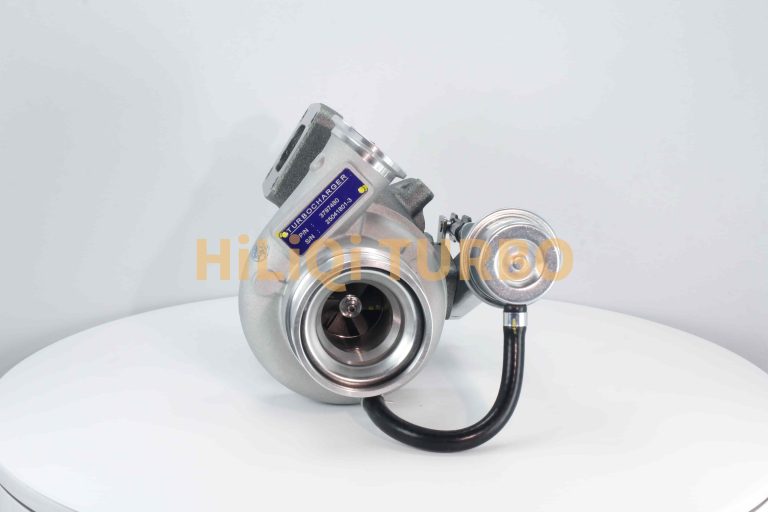
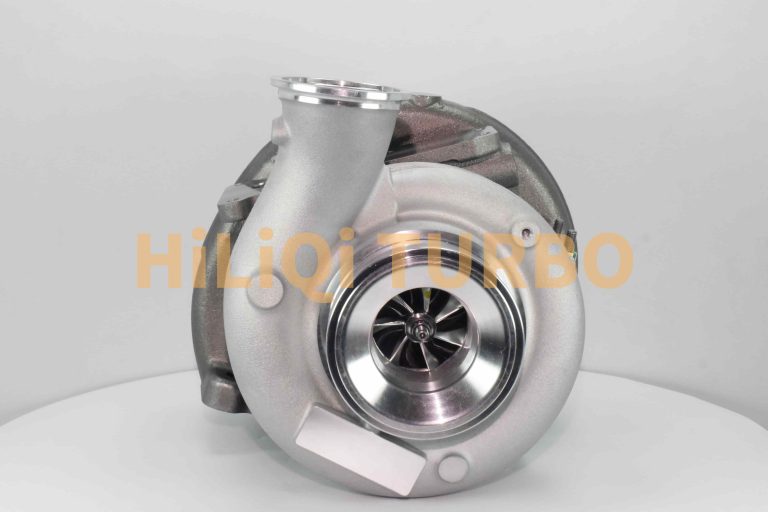
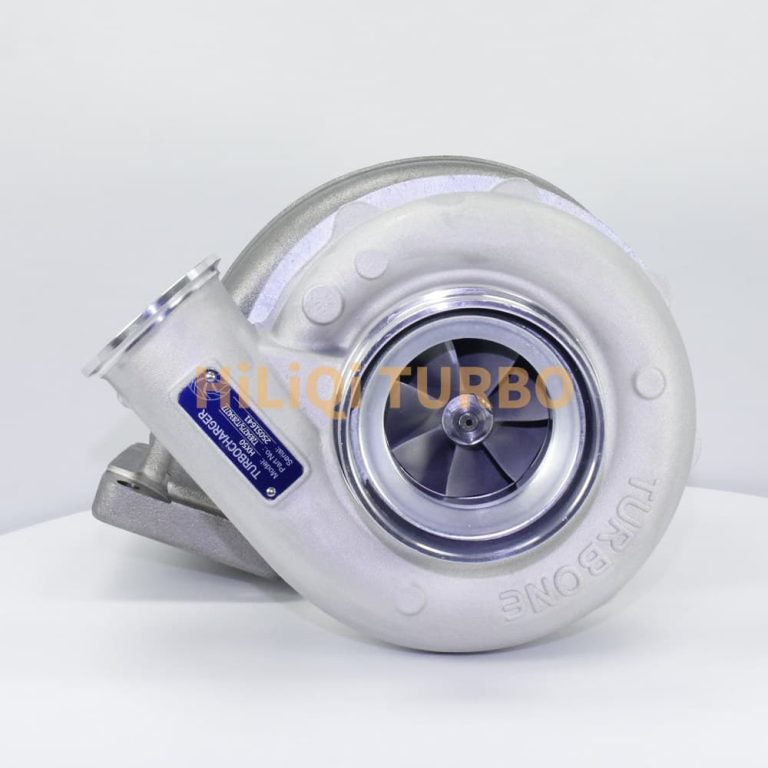
Start with the machine model and serial number, then record the engine model and the identification on the existing turbocharger. The turbo nameplate, OEM number, actuator arrangement, sensor connectors, oil ports, coolant ports, and housing orientation all help confirm the replacement.
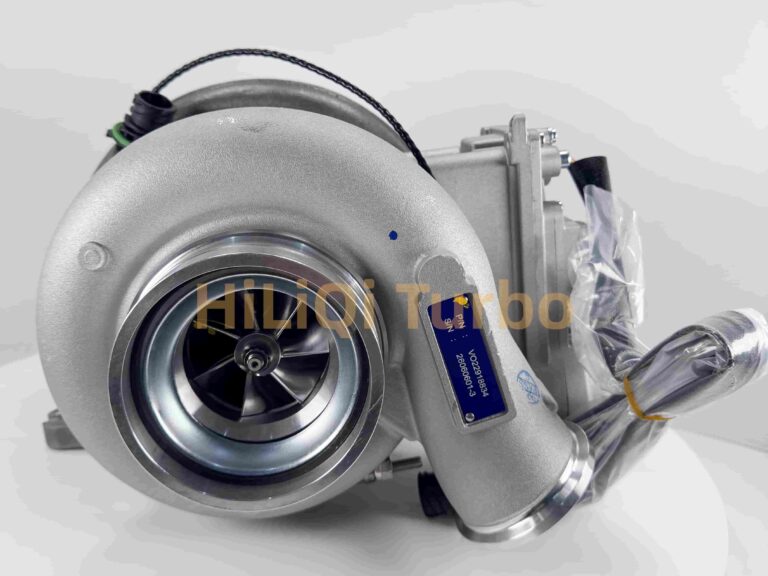
For example, the website lists the Volvo wheel loader turbo VOE22918834 with solenoid valve and speed sensor as a specific Volvo-related product rather than treating every Volvo application as interchangeable. The current Volvo category also contains different engine and turbo configurations, which reinforces why part-number matching should come before visual comparison.
Build a Fitment Record for Every Fleet Machine
Once a replacement has been confirmed on a machine, keep the information in the fleet maintenance system. Record the installed turbo number, supplier reference, installation date, machine hours, and any actuator or connector details.
This creates a useful internal cross-reference for future breakdowns. Instead of repeating the entire identification process during an urgent repair, the workshop can start with a previously verified configuration. Buyers managing several Volvo machines can also use the broader Volvo turbocharger range to compare available references before requesting model-level confirmation.
Which Operating Conditions Should Change Turbocharger Maintenance Priorities?
Construction equipment rarely experiences the same duty cycle from one machine to another. Maintenance intervals may come from the equipment manufacturer, but fleet teams should still use operating conditions to decide which machines deserve closer inspection between scheduled services.
Treat Dust and Intake Contamination as Fleet-Specific Risks
Excavators and loaders working around demolition, aggregates, mining, or dry earth may face far more airborne contamination than machines working on cleaner sites. In those conditions, intake sealing, air-filter condition, compressor inlet cleanliness, and hose integrity deserve closer attention.
A restricted filter can reduce airflow, while an intake leak downstream of the filter can allow contamination to reach the compressor wheel. Visible blade damage or debris should therefore trigger an intake-system investigation instead of an immediate assumption that the turbocharger itself was defective.
The construction turbocharger application range can also help procurement teams separate construction-machine demand from truck, generator, agricultural, and other replacement requirements. The website currently treats construction as a dedicated application category.
Watch Machines With Long Idle and Heavy-Load Cycles More Closely
A wheel loader that repeatedly moves from idle to hard acceleration experiences a different operating pattern from an excavator working continuously under load. Long periods of high exhaust temperature, frequent load transitions, irregular service, and extended idle time can all change what technicians see during inspections.
Rather than assigning an arbitrary universal turbo replacement interval, fleet managers should compare machines with similar duty cycles. A useful record combines engine hours with oil-service history, filter changes, boost complaints, visible leakage, fault codes, and previous turbo repairs. This makes maintenance decisions specific to actual machine use.
Which Checks Can Detect Turbocharger Problems Before a Machine Stops Working?

Turbocharger failures rarely become easier to diagnose after the machine is already down. A simple recurring inspection routine gives technicians a reference point and helps distinguish a developing turbo problem from an air, lubrication, control, or engine issue.
Track Changes From the Machine’s Normal Baseline
Fleet teams do not always need an elaborate test program. They do need consistent observations. Boost response, unusual noise, oil consumption, smoke, fault codes, and changes in engine performance become more useful when compared with the same machine’s previous condition.
A practical fleet record might look like this:
| Inspection Point | What the Technician Should Record | When to Investigate Further |
| Boost response | Actual behavior under comparable load | Noticeable change from the machine’s normal baseline |
| Intake system | Filter, hoses, clamps, restriction, debris | Leakage, restriction, or contamination is found |
| Compressor wheel | Blade edges, deposits, contact marks | Impact damage, rubbing, or foreign material appears |
| Lubrication | Oil condition, leaks, feed and drain lines | Contamination, leakage, or restricted flow is suspected |
| Actuator/control | Connector condition and fault codes | Fault persists after wiring and system checks |
| Repair history | Turbo, engine, oil, and filter work | Symptoms begin shortly after previous maintenance |
Inspect the Systems That Support the Turbocharger
A turbocharger depends on clean intake air, correct lubrication, unrestricted oil drainage, and a functioning exhaust and control system. That means technicians should resist replacing the turbo based only on smoke, noise, or low power.
The existing turbocharger maintenance guide discusses lubrication, inspection, intake cleanliness, and installation practices that can be incorporated into a fleet workshop routine. It is best used as a general maintenance reference alongside the service requirements for the specific Volvo machine.
When Should the Fleet Replace the Turbocharger Instead of Investigating the Engine System?
The replacement decision becomes easier once technicians separate confirmed mechanical damage from symptoms that could have several causes. This distinction can prevent a new turbocharger from being installed on an engine that still has the condition responsible for the first failure.
Identify the Failure Pattern Before Approving Replacement
Damaged compressor blades, housing contact, severe shaft or bearing distress, and other confirmed internal damage can justify removal. Even then, the inspection should continue beyond the turbocharger.
Foreign-object damage should lead technicians back through the intake path. Bearing distress should prompt checks of oil quality, oil pressure, feed lines, drain lines, and recent engine work. Oil around the compressor or turbine side should be evaluated together with drainage, crankcase pressure, and operating conditions.
If the root cause is still present, changing the turbo may only reset the clock on the same failure.
Separate Immediate Replacement From Planned Replacement
Fleet maintenance benefits from clear decision categories. A machine with confirmed wheel contact or serious mechanical damage may require immediate action. Another machine with a mild boost complaint but no confirmed turbo damage may need diagnosis rather than an emergency purchase.
This distinction also improves spare-parts planning. Procurement can prioritize verified, high-usage turbo models for stock while avoiding unnecessary inventory based on unresolved workshop complaints. The result is a more useful spare pool and fewer purchases made under breakdown pressure.
What Should Procurement Require Before Stocking Replacement Turbochargers?

Fleet purchasing changes the risk equation. A one-off replacement only needs to solve one repair; a stocked product may eventually be fitted to several machines. Procurement therefore needs evidence that the reference, configuration, and quality checks can be repeated consistently.
Ask for Model-Level Fitment and Inspection Information
Before approving a replacement, provide the supplier with the engine model, original turbo number, machine details, actuator or sensor configuration, and clear photographs. Then ask which cross-reference is being supplied and how the critical configuration was verified.
Inspection evidence is more valuable when it is specific. Finished-product records can include mounting dimensions, hole locations, angles, torque checks, and assembly observations. Where performance testing is relevant, buyers should also ask what parameters are recorded and how the results are linked to the supplied model.
Approve Samples Before Expanding the Order
For fleets or distributors purchasing several units, sample approval reduces uncertainty. Compare the sample against the removed unit before installation, then verify mounting, connections, actuator or sensor arrangement, and operating behavior on the intended engine.
Warranty terms should be reviewed at the same stage. Ask what information is required if a failure occurs, whether the supplier performs failure analysis, and how installation-related damage is separated from a product defect. These questions are more useful than relying on a general claim that every turbocharger is “high quality.”
What Should Fleet Buyers Expect From a Turbocharger Supplier?
Empresa fabricante de turbocompresores Beijing HiLiQi, Ltd. supplies aftermarket turbochargers across construction, commercial, agricultural, generator, and other engine applications, including Volvo references. Its website states that the company operates an IATF 16949-certified quality system and uses measurement and dynamic balancing equipment as part of its inspection capability. For fleet buyers, the useful question is how those capabilities support the specific model being sourced: cross-reference confirmation, dimensional inspection, sample approval, quality records, and post-sale failure review. Buyers should provide the machine model, engine identification, existing turbo number, actuator or sensor details, and photographs before scaling an order so that compatibility can be checked against the actual application.
Conclusión
Managing Volvo Construction Equipment turbochargers across a fleet depends on disciplined identification, inspection, diagnosis, and purchasing rather than waiting for complete failure. Record verified fitment data, compare each machine with its normal operating baseline, investigate supporting systems before replacing the turbo, and require model-specific evidence from suppliers. Once the application is identified, fleet buyers can submit the engine, machine, turbo number, and operating details for a replacement fitment review before approving stock or a larger order.
Preguntas frecuentes
1. Can I order a Volvo construction turbocharger using only the machine model?
Not reliably. The machine model should be combined with the serial number, engine model, existing turbo part number, and actuator or sensor configuration before a replacement is approved.
2. Does low boost always mean the Volvo turbocharger needs replacement?
No. Low boost may also be associated with intake leaks, restrictions, control problems, exhaust issues, or other engine conditions. Diagnose the complete system before authorizing replacement.
3. What should technicians record when a turbocharger is removed?
Record machine hours, turbo part number, visible wheel damage, shaft condition, oil evidence, fault codes, intake condition, lubrication findings, and any recent engine or turbo-related maintenance.
4. Should a construction fleet keep replacement turbochargers in stock?
It can make sense for verified models used across several machines. For low-volume applications, accurate fitment records may be more valuable than holding expensive stock with uncertain compatibility.
5. What should fleet procurement compare besides turbocharger price?
Compare cross-reference accuracy, configuration, inspection records, sample approval, warranty handling, packaging, technical response, and repeat supply consistency. A low purchase price provides little value if fitment errors create additional downtime.