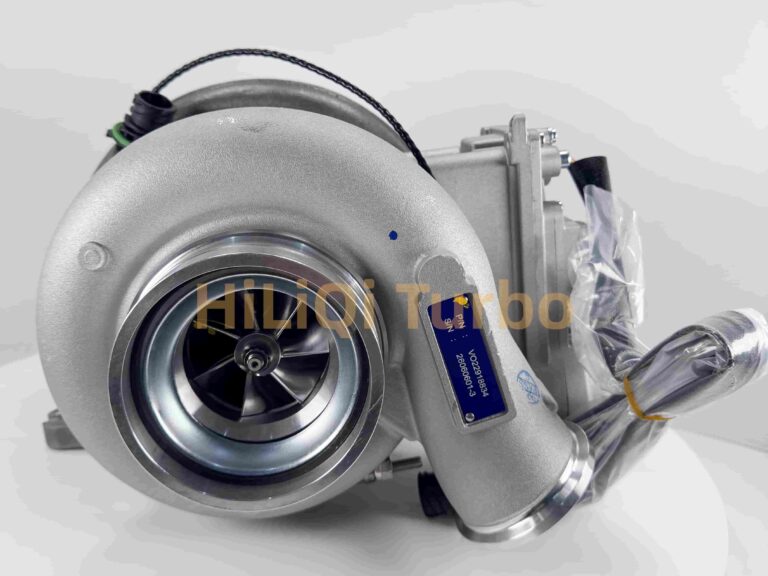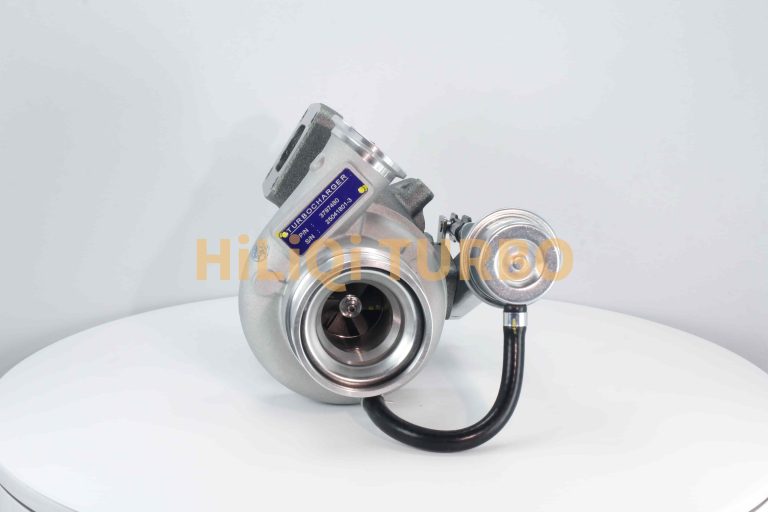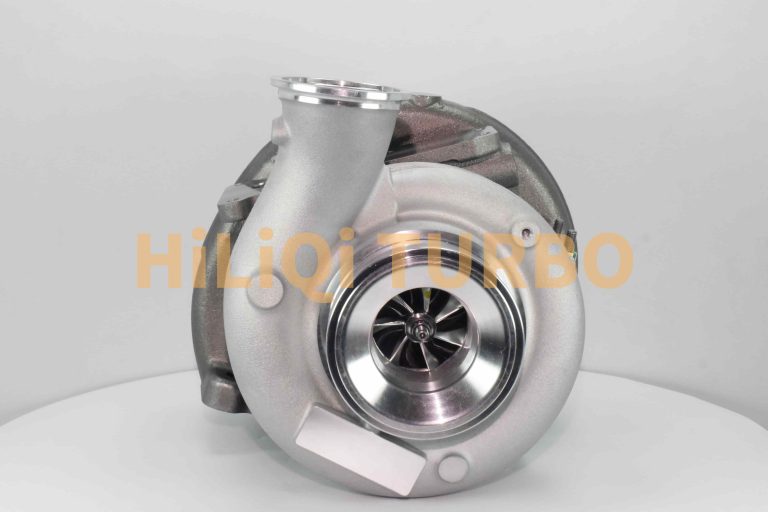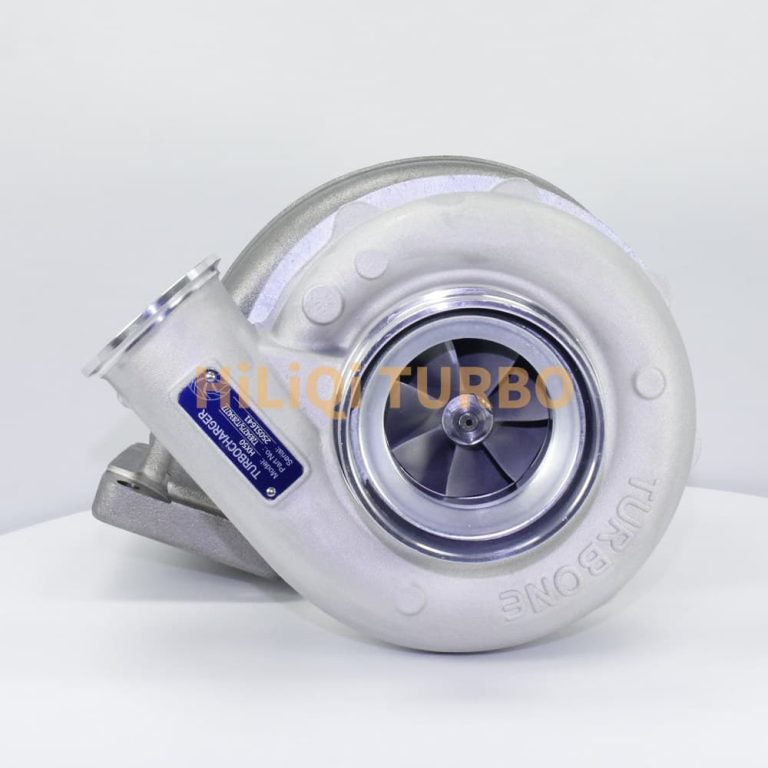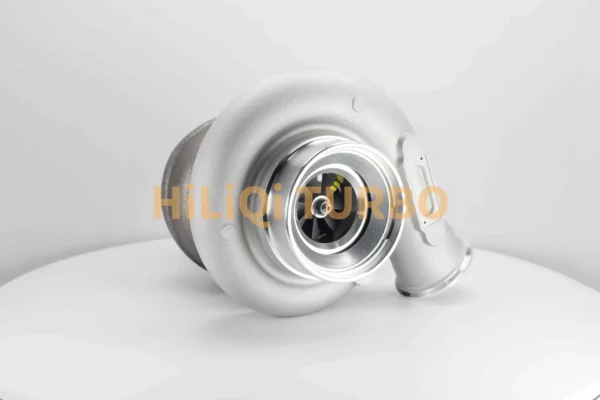
When a turbocharger’s identification (ID) plate is lost or is worn so that the part number can no longer be read, replacing it is no easy matter and requires great expertise. Incorrect part numbers can result in expensive standstill times, faulty assemblies and in the worst case also damage to the engine. In order to guarantee the mechanical functionality and boost pressure as well as the airflow and efficiency, as specified by the manufacturer of the engine, it is important to identify the correct turbocharger.
Common Scenarios Leading to Missing ID Plates
In practice, several conditions can cause an ID plate to disappear or become illegible. Over time, exposure to heat cycles, corrosion, and vibration can wear away engraved markings. In some cases, previous repair work or component replacements may have removed the original identification tag. Additionally, aftermarket modifications or non-OEM assemblies might lack proper labeling altogether. These situations make it necessary to rely on alternative methods to find the correct turbo part number.
What Information Can Help Identify a Turbocharger Without an ID Plate?
Without the ID plate, technicians are left to attempt to identify cores by visually inspecting them, taking their dimensions, and comparing against the associated casting information.
Visual Features That Provide Clues
A detailed visual inspection of the exterior of the turbocharger will give clues to its identity. Look at the overall housing design including the compressor and turbine housing cast shapes and flanges as well as the design of the actuator. The design of the compressor wheel including number of blades and wheel radius or curvature as well as the size of the turbine housing and design of wastegate will typically be within a certain model family. High quality images of all sides of the unit can then be referenced off against manufacturers websites or catalog data.
Measuring Key Turbocharger Components
Accurate measurement plays a critical role in narrowing down possible matches. Measure both compressor and turbine wheel inducer and exducer diameters using precision calipers or micrometers. Record A/R ratios (area over radius) for both housings as well as total assembly dimensions such as length and width between flanges. These numerical values can be cross-referenced with OEM specifications to identify compatible models.
Locating Casting Numbers or Stamps on the Turbocharger Body
Many turbochargers have cast in numbers or even only small stamps on them. The Turbine housings have casting marks on them, mostly the frame size of the casting or the model series. The compressor covers have – in the inside – numbers and letters which can be looked up in databases of the original equipment manufacturers. Even partly readable codes can be very helpful if one compares them with the engine data and the physical measurements with the corresponding supplier-catalogs.
How Can Engine Data Assist in Finding the Correct Turbocharger?
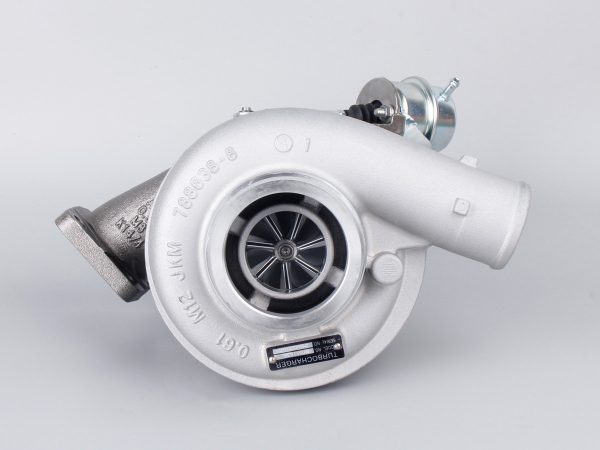
Additional information regarding an engine can be used in identifying an unknown turbocharger.
Collecting Essential Engine Information
Gather all available engine details including serial number, displacement, rated horsepower or kilowatt output, and emission standard compliance level (e.g., Euro IV, Tier 3). Also note vehicle make, model year, and any modifications affecting boost pressure or intake configuration. This data helps correlate specific turbo models with their intended applications.
Using Engine Data to Narrow Down Possible Turbo Models
As long as you know the parameters of your engine you can check your needed turbo on the application charts of the manufacturer of the turbo. By comparing the necessary flow and the achievable boost of the needed turbo with the characteristics of your offered turbos you can quickly eliminate the turbos that are not suitable for your engine. The technical documentation of the OEMs even contains detailed information of the possible combinations of engine types and turbo part numbers for certain engine types. It is very important to double check your needed part number before you order it.
Where Can Reference Databases and Supplier Support Be Utilized?
Digital resources and professional online networks facilitate the identification process greatly when physical identity marks are missing.
Leveraging Online Turbocharger Databases and Catalogs
Online catalogs and databases for turbochargers such as Garrett Motion’s online catalog and BorgWarner’s eCat have advanced search functions that allow cross referencing of unknown turbochargers by their dimensions or visual features. The diameters and casting numbers of measured components can be entered in these databases to find matching turbochargers with exploded views of their components. This allows engineers to check the correct fitment of a part without relying on the turbocharger’s external markings.
Collaborating with Authorized Distributors or Technical Experts
Our engineers work directly with the authorized distributors of the manufacturers to have access to proprietary information which is not online and that we cannot provide. By having detailed photos, precise measurements and engine information the engineers are able to conduct a detailed analysis using their internal reference tools. They then consult with the customer to ensure correct part is ordered and that it is installed correctly in accordance with the factory specifications to avoid any potential errors.
What Role Does Reverse Engineering Play in Identifying a Turbocharger?
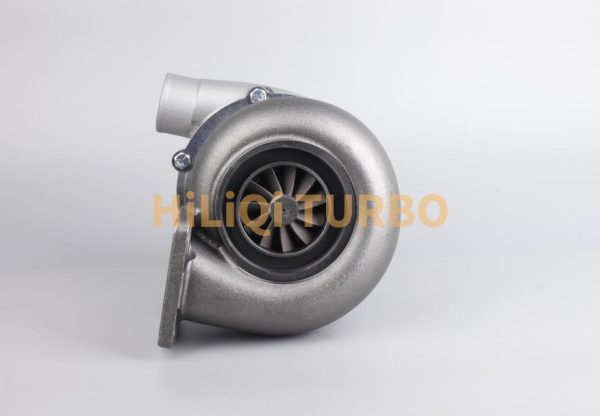
When all other identification methods have failed and there are no tags or records available, reverse engineering can be the solution.
When to Consider Reverse Engineering Methods
Reverse engineering is very effective for so called ‘legacy’ models of industrial machinery or engine components for which no longer any documentation is available. By reverse engineering engineers can reproduce the required critical parameters for procurement of matching replacement parts.
Processes Involved in Reverse Engineering a Turbocharger Component
The process begins by accurately scanning the 3D geometry of various key components, including compressor and turbine wheels. By conducting flow bench testing on examples of similar compressor and turbine assemblies, the relevant air mass flow rates and pressure ratios can be measured and cross referenced against examples within the company’s product database. The CAD profiles of components can then be built up in precise detail allowing comparison against examples stored within the database, the closest matching examples can then be selected as potential direct replacements.
Why Choose Beijing HiLiQi Turbocharger Manufacturing Co., Ltd.?
Beijing HiLiQi Turbocharger Manufacturing Co., Ltd. is the perfect partner for professionals searching for high quality turbochargers and reliable sources for their replacement. The company produces high quality turbochargers that are used for cars, boats, construction machinery, agricultural machinery and other applications all over the world. Beijing HiLiQi Turbocharger Manufacturing Co., Ltd.’s huge catalog and experienced technical support teams can identify any unknown turbo by measuring and correlate to specific engine models. The best possible match is guaranteed every time.
Conclusion
Determining the appropriate identification of a turbocharger without an ID plate can be a complex process that requires step by step methodology. A physical inspection of the unit, a dimensional analysis of the identified components, and correlation with applicable engine information, reference data, and databases are all necessary to reach an accurate determination. Furthermore, should discrepancies arise, it is always best to err on the side of caution to avoid possible damage due to incorrect components. In these instances, it is advisable to seek the assistance of an experienced manufacturer such as Beijing HiLiQi Turbocharger Manufacturing Co., Ltd. who can not only provide alternate OEM compliant replacements, but also design and manufacture custom turbocharger solutions to meet specific applications. In conjunction with the methodology required to accurately determine the correct turbo part number, the applicable manufacturer can provide the utmost technical expertise to ensure the most accurate determination throughout the process.
FAQs
How can I confirm if my identified turbo part number is correct?
Just check the identified part number against the OEM part numbers found in the manufacturers’ official part catalogs as well as in validated supplier part databases. Check the fit for the actual physical dimensions such as wheel size as well as the mounting points. Also, check the manufacturers’ published performance curves.
Can I use a visually similar turbocharger as a replacement?
Even small differences in wheel size or A/R ratio can have significant effects on airflow characteristics and boost response. Always verify complete specifications before installation.
What should I do if multiple possible part numbers appear during identification?
There is always the chance that several matches may arise during the analysis process and in order to identify the correct one you would have to refer back to the authorized distributors or technical experts who compiled your data including photographs, measurements, casting numbers and full engine details. They can cross reference this using proprietary reference data that has not been released to the general public in order to come to a definitive conclusion.